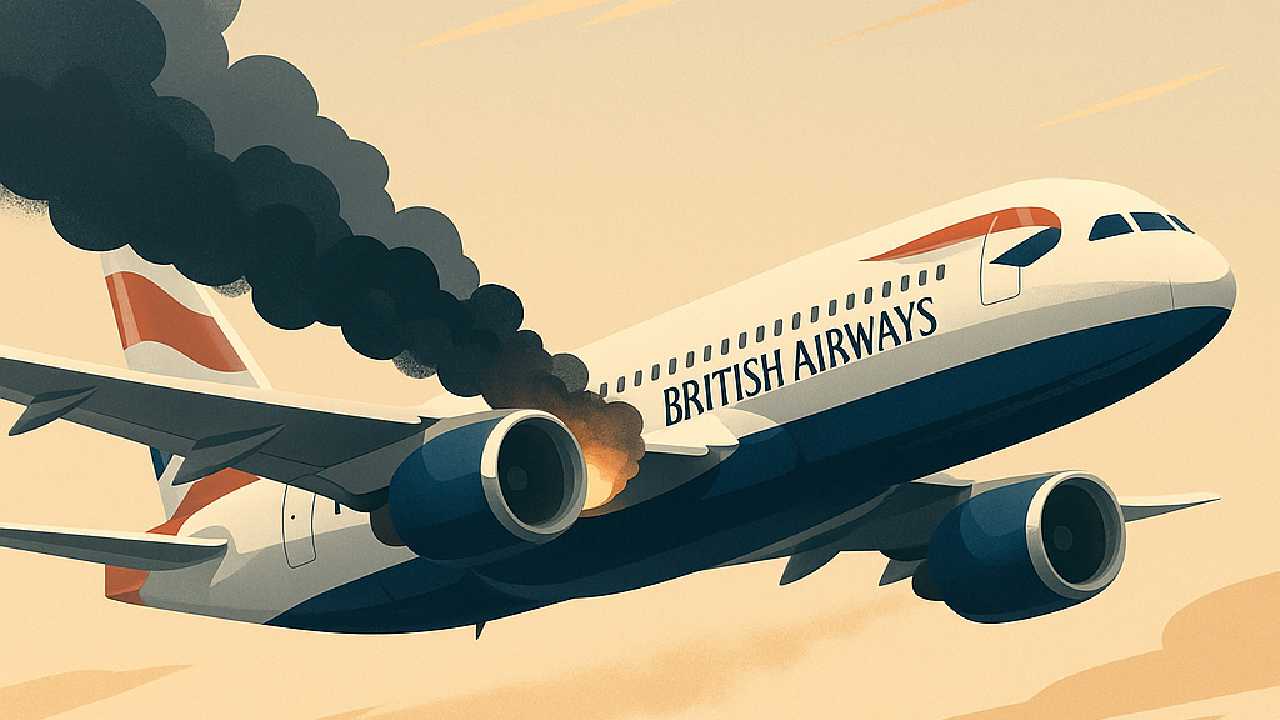
A Sudden Mid-Air Emergency That Captured Global Attention
There are moments in aviation that spark an immediate mix of curiosity and concern, even among frequent flyers. The recent incident involving british airways emergency flight ba286 was one of them. A long-haul route known for its predictability suddenly became the center of headlines and passenger conversations, raising important questions about how airlines handle unexpected technical issues and what today’s safety standards truly look like.
For many travelers, the story struck a familiar tension: the trust we place in machines and the people who operate them, balanced against the rare times when something interrupts the quiet rhythm of a routine flight.
Understanding the Flight Behind the Incident
This section looks at what BA286 is, why it matters, and the operational context behind it. Knowing the basics of the route helps explain why the emergency drew the kind of attention it did.
What Makes BA286 a Key Route for British Airways
BA286 operates between San Francisco and London Heathrow, a long and heavily traveled corridor connecting two tech and business hubs. It’s typically flown by a Boeing 777 or a similar long-range aircraft designed for reliability, redundancy, and endurance.
The flight averages around 10 hours and is part of British Airways’ high-performing west coast schedule. With a strong on-time history and consistent demand, BA286 rarely makes news—which is one reason this incident stood out.
British Airways’ Safety Reputation
British Airways remains one of the most respected legacy carriers in global aviation. Safety investigators and industry rankings consistently place the airline among the leaders for operational discipline, rigorous maintenance, and crew training.
A quick snapshot of long-haul performance illustrates that:
| Category | Insight |
|---|---|
| Annual long-haul flights | 45,000+ |
| Major safety events | Extremely rare |
| BA286 punctuality | Roughly 75% on-time |
In short, an emergency involving this particular flight was an exception rather than a trend.
What Happened Onboard the Day BA286 Diverted
This heading explains what unfolded in the cabin, why the aircraft diverted, and the procedures that shaped the crew’s response. Readers often search for simple and credible explanations during aviation events, and this section provides exactly that.
A Timeline That Unfolded Quickly but Calmly
Not long after takeoff, the crew received a technical alert that required immediate evaluation. What followed was a steady, procedural response shaped by years of training:
- The pilots identified the alert and ran their emergency checklists.
- Communication with air-traffic control began almost instantly.
- Cabin crew briefed passengers with a calm, steady tone.
- The aircraft initiated a controlled diversion to the nearest safe airport.
- Fire and ground crews met the plane—a routine precaution.
Passengers later said the cabin environment was reassuringly calm despite the unexpected shift.
What the Technical Alert Could Mean
While official investigations take time, early indications suggested a system warning such as pressurization, engine monitoring, or electrical sensors. These alerts are intentionally sensitive. They don’t always mean the aircraft is in danger—they mean the system wants the crew to check everything immediately.
Aviation analysts often point out that:
- Most diversions stem from precaution, not imminent threat.
- Aircraft are engineered with layered redundancies.
- Safety systems are designed to err on the side of caution.
The safe landing of BA286 supports that reality.
How the Crew’s Training Shaped the Outcome
Aviation safety isn’t built only on technology. It’s built on people—specifically, how well they’re prepared to respond when the unexpected happens.
Inside the Cabin: Professionalism Under Pressure
Passengers described British Airways’ cabin crew as composed and attentive. They shared updates, reassured families, and guided passengers through the steps needed before landing. Their training focuses not just on procedure but on communication—a critical skill in moments of uncertainty.
What Happens in a Flight Deck During an Emergency
Pilots follow strict checklists created by Boeing, the airline, and global regulators. These include:
- Assessing the alert
- Evaluating whether the flight can safely continue
- Choosing the nearest airport with the right equipment
- Coordinating a diversion with air-traffic control
- Preparing the aircraft for an adjusted landing
This process is so well-practiced that diversions often feel less dramatic than passengers expect.
The Passenger Perspective
Understanding how travelers felt gives the event a human dimension, grounding facts in lived experience.
Calm, Clarity, and a Sense of Control
Many passengers described an atmosphere that remained stable throughout the diversion. While natural worry surfaced, they credited the crew for steady instructions and the absence of panic.
Some reported mild turbulence during descent, but nothing beyond what they’ve felt on ordinary flights. Several expressed gratitude for the transparency and professionalism displayed.
Travel Plans Interrupted, but Not Abandoned
A diversion can derail connections and itineraries. British Airways assisted passengers through:
- Rebooking support
- Accommodation arrangements for extended delays
- Meal vouchers
- Updated travel information
Depending on the final investigation, some travelers may also qualify for compensation under relevant regulations, including EU261.
How British Airways and Industry Experts Framed the Incident
This section offers credibility, showing the airline’s response and what experts say about modern air safety.
British Airways’ Public Response
The airline confirmed that british airways emergency flight ba286 diverted due to a technical indication and emphasized that the crew acted correctly. They reiterated their focus on safety as the core of their operations and assured passengers that the aircraft would undergo a thorough inspection.
The tone was consistent with BA’s public communication standard—measured, clear, and focused on responsibility.
Expert Analysis: Why Diversions Are a Sign of Safety, Not Danger
Aviation experts widely agree that the industry has become safer because crews divert quickly, not reluctantly. Analysts noted:
- Diversions are often precautionary.
- Modern aircraft have early-detection systems that amplify safety.
- Trained responses matter more than the alert itself.
In essence, the incident demonstrated the strength—not weakness—of today’s aviation ecosystem.
Why This Event Matters to Everyday Travelers
Beyond headlines, aviation stories carry emotional weight because millions fly every day. Understanding the meaning behind incidents helps ease the anxiety many people feel about air travel.
Aviation Safety Today Is Stronger Than Ever
Industry data continues to show that flying remains the safest major mode of transportation. Emergency diversions, while attention-grabbing, are built into the system to keep passengers safe long before a risk becomes real.
A brief look at global patterns:
| Event Type | Frequency | Interpretation |
|---|---|---|
| Technical diversions | Common | A protective measure |
| Critical failures | Rare | Result of modern engineering |
| Passenger injuries during diversions | Extremely rare | Strong procedures work |
These numbers support what passengers experienced that day: controlled safety, not crisis.
Practical Tips for Passengers
Being prepared can reduce stress if an unexpected situation arises. Experts often recommend:
- Keep your seatbelt fastened even during smooth flight.
- Listen to the crew—they’re trained for every scenario.
- Stay calm and avoid speculating.
- Keep essentials like medication within reach.
Awareness gives travelers a sense of control even in unfamiliar moments.
A Reflection on Trust, Training, and the Human Side of Aviation
The incident involving british airways emergency flight ba286 is a reminder of how much trust passengers place in the systems and people guiding them across continents. It’s also a quiet testament to the crews whose experience often turns potential problems into safe, uneventful landings.
In an age where travel has become both routine and essential, stories like this highlight the blend of engineering, vigilance, and human skill that keeps millions moving every day. For travelers, it offers reassurance: when something unexpected happens in the sky, there is a well-practiced plan—and people ready to carry it out.
Relevant Article : United Airlines Flight UA770 Emergency Diversion