A Quiet Shift Signals the Next Big Tech Era
The smartphone has been the center of modern life for nearly two decades. Yet the mood inside major tech companies has changed. Growth has slowed, upgrades feel smaller, and users are spending less time waiting for the next big phone reveal. Today, tech giants envision future beyond smartphones, and the shift feels both overdue and inevitable.
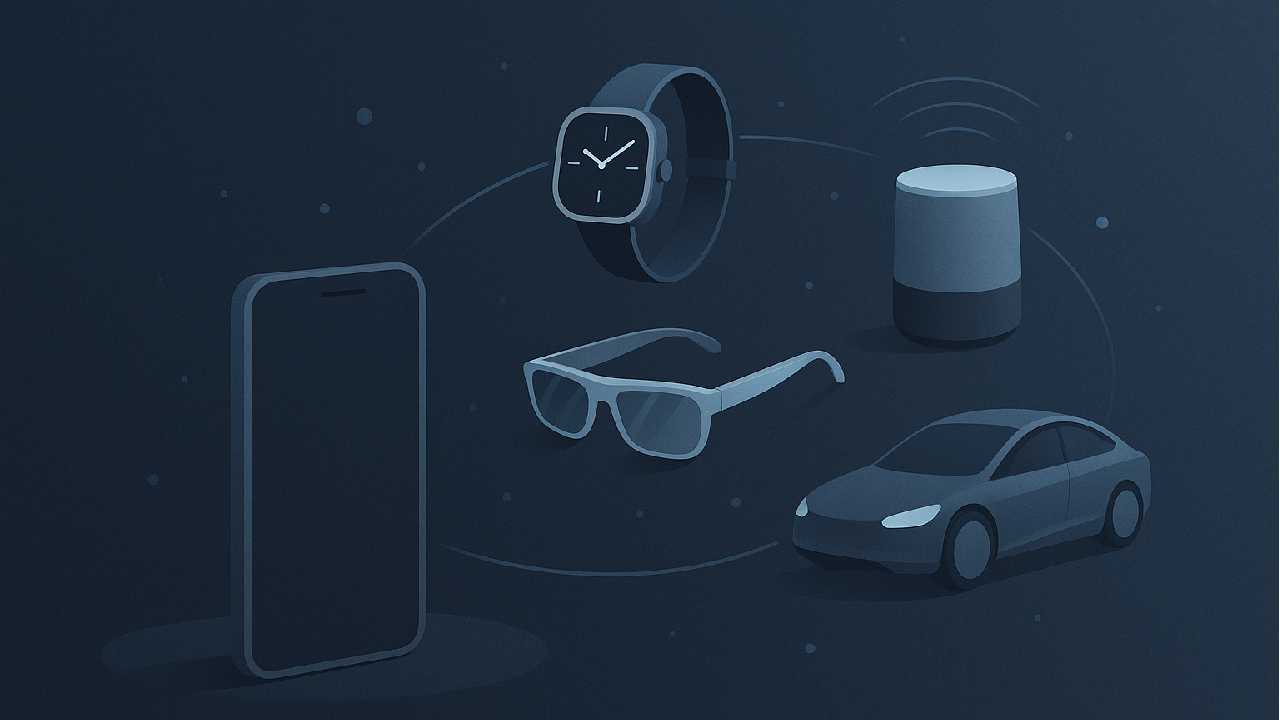
The new vision isn’t about replacing the phone with another dominant device. It’s about breaking the idea that a single screen should control our digital world. Instead, companies are building a constellation of tools—wearables, glasses, voice assistants, home systems—that work together so technology feels present, not overwhelming.
The Smartphone Plateau
The global smartphone market has been signaling fatigue for years. Shipments have slipped, upgrade cycles have stretched, and innovation has stalled. This long plateau has pushed companies to imagine what comes next.
A Market Looking for Its Next Chapter
Most people upgrade their phones every three to four years now. That alone changes the economics of the industry. Companies that once relied on annual excitement now face consumers who want better experiences, not just new screens.
For brands, the slowdown becomes a creative challenge. If the phone is no longer the anchor of everyday digital life, what should take its place? The answers are shaping the next decade of personal tech.
Wearables Start Taking the Lead
Wearables are no longer accessories—they’re becoming essential. This category now grows faster than smartphones, driven by health tracking, seamless notifications, and lightweight convenience.
Why Wearables Fit the Future
A smartwatch or health band carries tasks once reserved for phones: messages, payments, fitness tracking, even navigation. Users appreciate the reduced screen time and improved comfort. Apple, Samsung, and Garmin continue to layer health insights into their devices, turning them into daily companions rather than gadgets.
The movement feels natural: as tech giants envision future beyond smartphones, wearables evolve into the first true bridge toward hands-free digital living.
AR and VR Take a Real Swing at the Main Stage
AR and VR have long hovered on the edges of consumer tech. Now, with richer hardware and deeper investment, they’re stepping into a more serious role.
The New Spatial Computing Race
Meta’s continuous push into mixed reality, Apple’s introduction of Vision Pro, and Samsung and Google’s collaborative XR efforts show a unified belief: immersive computing will play a meaningful role in the post-phone era.
While these headsets are not ready to replace the smartphone, they hint at a near-future where information floats in space rather than sits behind glass. Meetings, entertainment, design work, navigation—each becomes more intuitive when screens expand into the room around you.
AI Assistants Grow Into Real Digital Partners
AI has quietly become the new interface. What started with voice commands has expanded into predictive help, context-aware suggestions, and on-device intelligence.
A Shift Away From Apps Toward Understanding
Apple Intelligence, Google Gemini, Meta AI, and enhancements to Amazon Alexa show how AI is moving beyond simple answering. These systems learn patterns, anticipate needs, and respond in more natural ways. Instead of opening apps and tapping through menus, users simply speak, ask, or gesture—and the system responds.
This evolution aligns with the broader direction tech giants envision future beyond smartphones: a world where technology understands us, rather than the other way around.
Ambient Computing Makes Technology Feel Invisible
Tech doesn’t have to be louder to be better. Increasingly, companies are designing tools that fade into the background and work quietly in everyday spaces.
When the Home Itself Becomes the Interface
Smart speakers, home hubs, connected appliances, and IoT networks help create living environments that are more responsive and adaptive. Google Nest, Amazon Echo, and Apple HomePod let users manage lights, doors, thermostats, and more with simple conversation.
The goal is subtle: remove friction, not add features. When devices collaborate across a home, the idea of pulling out a phone becomes less necessary.
Smart Glasses Start Looking More Practical
While AR headsets aim big, smart glasses target small, everyday needs. That’s why they might earn widespread adoption sooner.
Lightweight, Hands-Free, Always There
Meta’s Ray-Ban smart glasses renewed interest in the category by focusing on simplicity—photos, videos, calls, and audio. Xiaomi, OPPO, and Samsung are following with their own visions.
The appeal is clear:
- No need to hold a device
- Quick access to information
- Seamless integration into daily routines
Challenges remain, especially battery life and privacy. But momentum has shifted, and glasses now stand as one of the strongest candidates in the post-phone landscape.
Foldables Serve as the Transition, Not the Destination
Foldable phones offer something familiar yet new. They expand screen space without changing habits, making them a practical bridge between today’s phones and tomorrow’s systems.
Why Foldables Still Matter
Samsung’s Z Fold and Z Flip, Google’s Pixel Fold, and the OnePlus Open show strong consumer interest. They appeal to users who want more from their screens without leaving the smartphone ecosystem behind.
Foldables won’t define the next era, but they help extend the current one while other categories mature.
Cars Become Expanding Digital Spaces
Automotive tech is becoming a major extension of personal computing. This shift is redefining how people interact with their digital lives on the move.
A New Platform on Wheels
Apple CarPlay and Android Auto have evolved far past simple mirrors of the phone. Tesla’s in-car system, meanwhile, treats the vehicle itself as a computer. As cars become smarter and more connected, phones play a smaller role in the driving experience.
What Life Could Look Like by 2030
The future may not revolve around a single device anymore. Instead, users will move between systems that cooperate effortlessly.
A World With Less Screen Time and More Meaningful Tech
By 2030, we may rely on a mix of:
- Smart glasses
- Wearables
- AI-powered assistants
- Ambient home systems
- Connected vehicles
The combined effect is simple: technology becomes more human, less intrusive, and more deeply integrated into daily life.
A Future Beyond the Screen
The transition away from the smartphone won’t happen in one moment. It will arrive gradually, through small shifts in behavior and exciting leaps in innovation. But the direction is clear. Major tech giants envision future beyond smartphones, and they are building a world where devices work together to support life—not interrupt it.
As these ideas take shape, we are not stepping into a world with more technology, but one where technology works more quietly, more thoughtfully, and more in tune with the way people actually live.