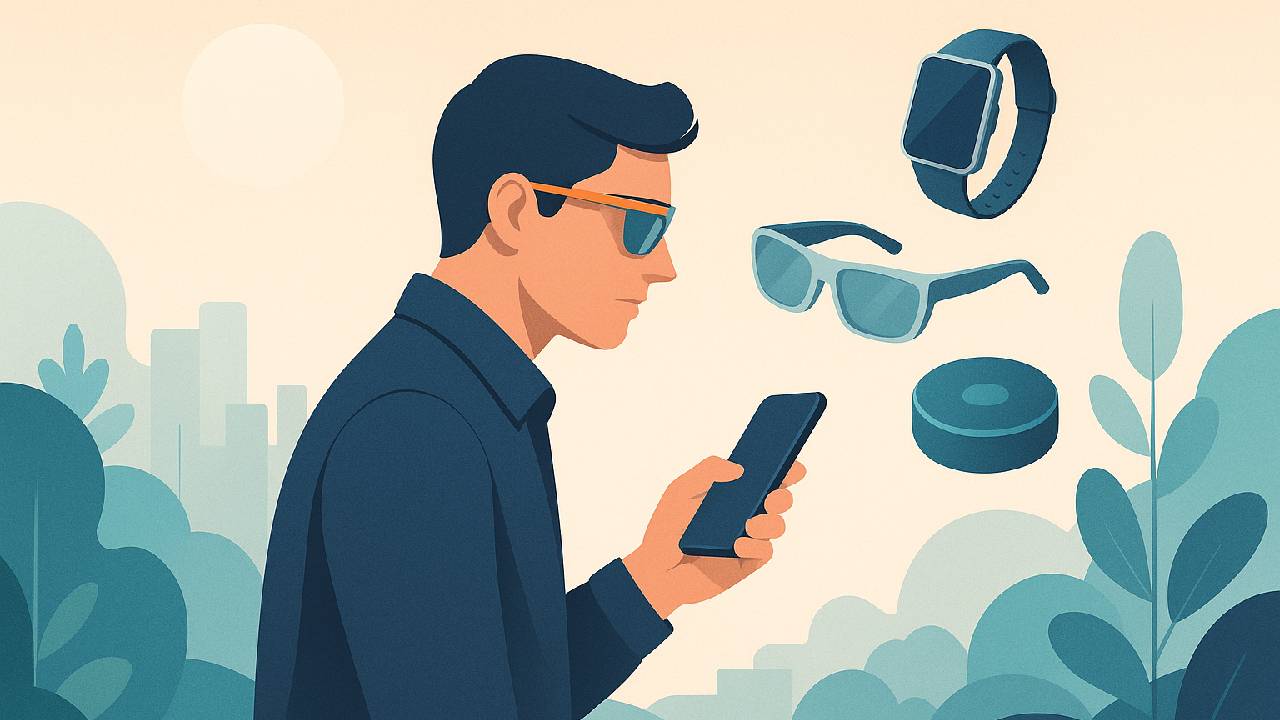
Smartphones have shaped the rhythm of modern life for more than a decade. Yet a quiet shift is underway. As innovation slows and screen fatigue grows, the idea of Tech Giants Envision Future Beyond Smartphones is becoming more than an industry prediction—it’s becoming a strategic priority. Across Silicon Valley and beyond, companies are building devices and digital systems that blend into daily life rather than dominate it. Their shared vision points toward a future where technology feels lighter, more natural, and woven into the world around us.
The Smartphone Era Reaches Its Natural Plateau
The global smartphone market has been losing momentum for years. Growth has slipped, upgrades feel more incremental, and many people now keep their devices longer than ever. These trends have pushed major tech companies to rethink what comes next—and how they can shape the next era of personal technology.
A Market Ready for Change
For most consumers, smartphones still matter, but they no longer surprise. The once-thrilling annual releases now bring familiar updates: better cameras, brighter screens, slightly faster chips. Innovation has become predictable, and predictable rarely drives the next big leap. That is why many believe the next frontier will not fit inside a pocket at all.
Wearables Become the First Major Step Forward
Wearable technology has quietly matured, and its next chapter is built around AI and seamless interaction. This shift marks one of the clearest signals of how Tech Giants Envision Future Beyond Smartphones.
A New Relationship With Digital Life
Smart glasses, AI pins, and voice-driven assistants promise something phones cannot: a hands-free experience. They reduce friction and remove the constant pull of a glowing screen. When technology becomes something you wear—not something you check—it changes your behavior. It becomes a companion rather than a device.
The Products Leading the Shift
- Lightweight smart glasses with built-in cameras and audio
- AI companions for quick answers and on-the-go assistance
- Wrist devices designed for gesture-based control
- Early AR displays that layer digital cues onto the real world
Wearables are no longer side gadgets. They are becoming part of a larger move away from traditional mobile habits.
Mixed Reality and Spatial Computing Redefine Interaction
Mixed reality is no longer science fiction. High-resolution headsets, spatial apps, and realistic 3D environments are setting the stage for a world where screens become optional.
Bridging Physical and Digital Spaces
Products like the Apple Vision Pro and Meta Quest are introducing new ways to work, connect, and create. Instead of tapping on glass, users can interact with apps that appear in the air around them. This new interface hints at how digital tools may evolve once smartphones are no longer the center of everyday life.
Big Tech Investments
Years of investment make it clear: MR is not a passing trend. Billions have gone into research, hardware, and developer ecosystems. The long-term aim is simple—build a platform that replaces the phone as the primary gateway to digital living.
Ambient Computing Makes Technology Almost Invisible
Ambient computing is the opposite of constant screen time. It focuses on environments that understand context, anticipate needs, and respond without being asked.
When Tech Becomes Part of the Background
Smart homes that adjust lighting automatically. Assistants that remind you of tasks before you forget. Rooms that recognize your preferences. This is the direction companies like Google, Amazon, and Samsung are going—toward a world where technology supports you quietly rather than demanding attention.
Ambient computing feels like the natural progression of convenience-driven innovation, and it aligns closely with how Tech Giants Envision Future Beyond Smartphones.
Inside the Vision of Leading Tech Companies
Every major tech company has its own roadmap, but all share the same destination: a future less dependent on traditional smartphones.
What Each Company Is Building
Apple
Focused on spatial computing and health-driven wearables that could eventually take the role of today’s mobile devices.
Google
Investing heavily in ambient computing, AI tools, and early AR eyewear experiments.
Meta
Pushing toward a mixed reality ecosystem and lightweight smart glasses meant to replace certain smartphone uses.
Samsung
Working on advanced foldables, early XR hardware, and deep smart-home integrations.
Microsoft
Concentrating on mixed reality for productivity, along with AI copilots for everyday work.
Their efforts don’t compete as much as they collectively build the foundation of a new ecosystem.
Are Consumers Ready to Move Beyond Phones?
Not fully—but the shift has started. Younger generations spend less time staring at screens and more time using voice, wearables, and quick digital interactions.
What People Want Today
- Convenience without constant tapping
- Fewer notifications
- Less screen time
- More natural, intuitive tools
- Affordable alternatives to high-end devices
As these habits grow, the industry’s direction makes more sense.
The Challenges Slowing This New Landscape
Despite the excitement, several barriers stand in the way.
Limitations That Still Need Solving
- Wearable battery life remains limited.
- Always-on sensors raise privacy questions.
- Hardware costs are high for early adopters.
- No unified standards yet exist for interaction.
Progress is steady, but a truly phone-free world will take time to mature.
A Glimpse Into 2035 and Beyond
Imagine daily life where you rarely hold a device. Instead, your environment responds to you naturally.
What the Future Could Look Like
- AR cues guide your commute.
- Work meetings happen in 3D spaces.
- Homes adjust lighting, sound, and temperature automatically.
- Digital assistants coordinate schedules and tasks in the background.
- Wearables replace many functions once tied to phones.
This shift won’t happen overnight, but the direction is clear.
A New Era Begins—Quietly but Unmistakably
The vision of a world beyond handheld screens is no longer speculative. Tech Giants Envision Future Beyond Smartphones because the next chapter of technology must feel more intuitive, more human, and less intrusive. As wearables, mixed reality, and ambient computing mature, everyday interactions will become more fluid and less centered on a single device.
The smartphone defined the last era of digital life. The next one will be defined by how seamlessly technology blends into the world around us.