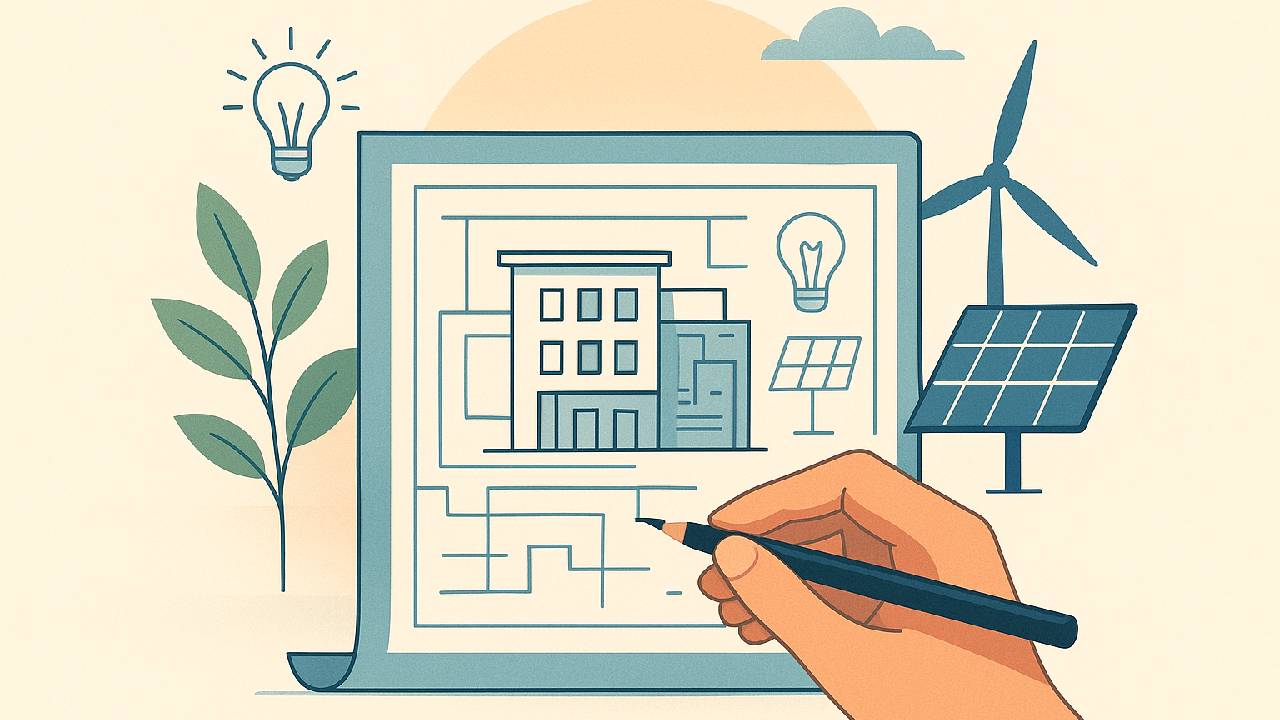
The Silent Blueprint Behind India’s Energy Revolution
Every energy-efficient building begins long before the first brick is laid — it starts with a drawing. The Bureau of Energy Efficiency drawing, often overlooked outside technical circles, has quietly become the backbone of India’s green transformation.
These plans are more than architectural blueprints. They reflect a new design philosophy — one that blends innovation, regulation, and responsibility to cut energy waste and reduce carbon footprints. In a country racing toward its 2070 net-zero goal, such efficiency-driven designs have never mattered more.
What Makes a Bureau of Energy Efficiency Drawing Different
At its core, a Bureau of Energy Efficiency drawing visualizes how a building conserves power — not just how it looks. It maps lighting layouts, HVAC systems, insulation, and even renewable energy connections, ensuring that every watt counts.
Each design must align with the Energy Conservation Building Code (ECBC), India’s benchmark for sustainable construction. For engineers and architects, these drawings act as both a creative framework and a compliance checklist, turning sustainability from an afterthought into a design foundation.
In simple terms, a BEE drawing bridges the gap between energy policy and everyday practice. It translates abstract efficiency standards into something you can build, live, and work inside.
The Bureau of Energy Efficiency’s Broader Mission
The Bureau of Energy Efficiency (BEE), under India’s Ministry of Power, was founded with a simple but ambitious goal: make energy efficiency a national priority. Its labeling programs — from star-rated appliances to certified green buildings — have already transformed consumer behavior and industrial practice.
According to BEE’s latest data, India saved over 110 billion units of electricity in 2023, preventing nearly 91 million tonnes of carbon emissions. Those savings are not just numbers — they represent cooler homes, cleaner air, and a more resilient grid.
| Year | Energy Saved (Billion Units) | CO₂ Reduction (Million Tonnes) | Source |
|---|---|---|---|
| 2020 | 86.9 | 71 | BEE Annual Report |
| 2023 | 110.3 | 91 | Ministry of Power |
These results highlight how policy, when paired with practical design tools like the BEE drawing, can deliver measurable environmental progress.
Inside a BEE-Compliant Design
A BEE-compliant drawing is part science, part storytelling. It shows how energy flows through a building — from sunlight and ventilation to air conditioning and artificial light.
Lighting and Electrical Planning
Designers start with natural light. By positioning windows strategically and using reflective surfaces, they reduce dependence on artificial lighting. Motion sensors and energy-efficient fixtures add another layer of conservation.
HVAC and Mechanical Systems
Cooling and heating systems are mapped out for maximum performance with minimum load. Using BEE-approved HVAC units and smart zoning, buildings can maintain comfort without driving up power bills.
Building Envelope and Materials
Walls, roofs, and glazing are chosen for their thermal performance. These details, often defined by U-values (a measure of heat transfer), help maintain indoor temperatures with minimal energy loss.
Renewable Energy Integration
Increasingly, BEE energy efficiency drawings also feature rooftop solar panels and battery storage. These additions allow buildings to generate part of their own energy — a crucial step toward self-sufficiency and sustainability.
The Process Behind the Blueprint
Creating a BEE-compliant design isn’t just about drawing lines; it’s about coordination. Architects work alongside certified energy auditors and consultants to ensure accuracy.
Typical process steps include:
- Assessing a project’s expected energy use.
- Selecting BEE-certified appliances and materials.
- Conducting energy simulations using tools like AutoCAD or Revit.
- Documenting compliance for ECBC approval.
When done right, the drawing becomes a living record of energy responsibility — something that can be verified, measured, and improved over time.
Why These Drawings Matter
Buildings account for nearly 40% of global energy use, and India is urbanizing faster than ever. Each Bureau of Energy Efficiency drawing ensures that this growth doesn’t come at the expense of the planet.
The Benefits Go Beyond Compliance
- Lower energy bills for occupants.
- Faster project approvals from regulators.
- Eligibility for green certifications like GRIHA or LEED.
- Enhanced property value and long-term operational savings.
For companies, these benefits add up to something even greater: trust. A BEE-approved project signals responsibility and foresight — values increasingly demanded by investors and consumers alike.
Lessons from the Field
Several landmark projects in India showcase the power of BEE standards in action.
| Project Name | Energy Reduction (%) | Type | Year | Source |
|---|---|---|---|---|
| ITC Green Centre | 42% | Commercial | 2022 | BEE India |
| Infosys Campus | 35% | Corporate | 2023 | CII GBC |
These sites demonstrate that sustainability and performance are not opposites. They are, in fact, two sides of the same design philosophy — thoughtful, efficient, and future-focused.
The Road Ahead for Energy Efficiency in India
India’s path toward sustainability is accelerating. With emerging tools, AI-driven modeling, and smarter building materials, the next generation of BEE energy efficiency drawings will likely be more dynamic and data-driven than ever before.
The Bureau of Energy Efficiency is already updating codes like ECBC and SEEP to reflect modern realities — hotter climates, denser cities, and a growing need for energy independence. For designers and engineers, that means more opportunities to innovate within a clear, sustainable framework.
A Quiet Revolution, One Drawing at a Time
The Bureau of Energy Efficiency drawing may not capture headlines, but its impact is everywhere — in the cooler hallways of a modern office, the reduced glare of a sunlit classroom, or the lighter footprint of a sustainable home.
It represents India’s evolving identity: pragmatic, forward-thinking, and deeply committed to balancing growth with responsibility.
When energy efficiency becomes a blueprint rather than a buzzword, progress stops being a promise — it becomes policy on paper, and performance in practice.