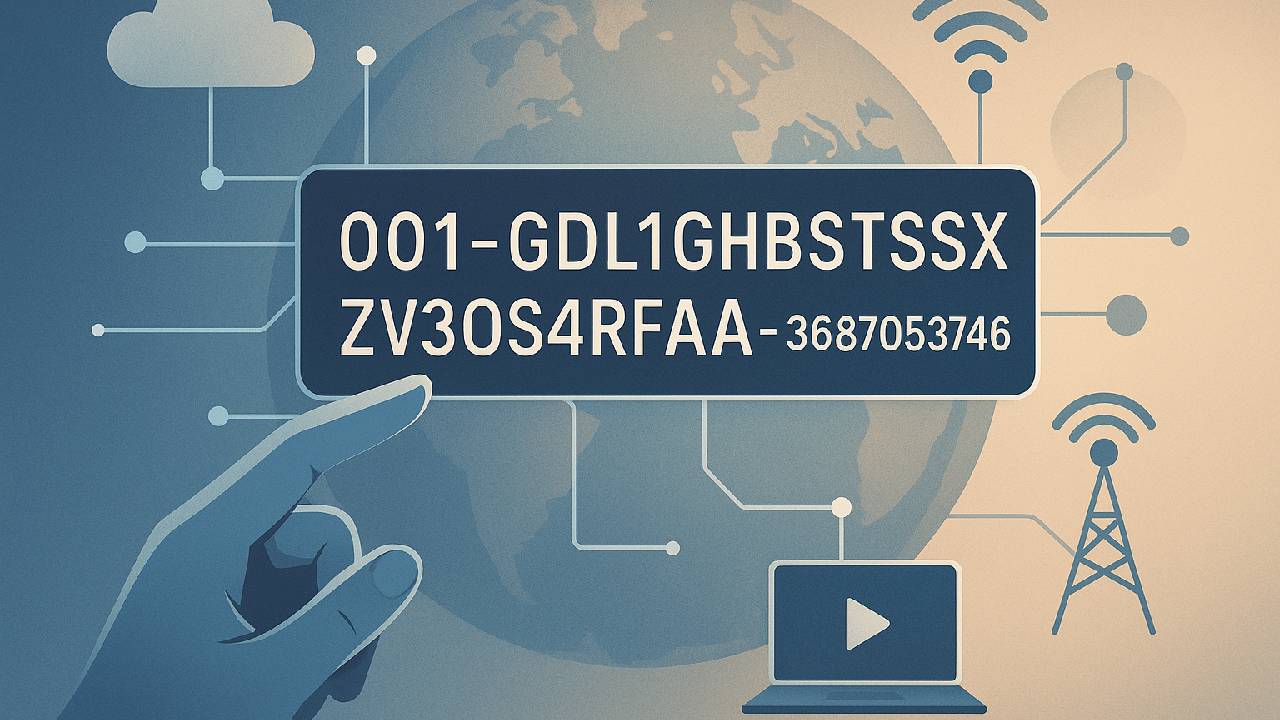
At first glance, the cryptic code 001-GDL1GHBSTSSXZV3OS4RFAA-3687053746 might seem like just another string of characters lost in the sea of digital identifiers. Yet, this specific sequence is tied to a groundbreaking innovation that’s quietly reshaping how technology integrates into everyday life. Its influence spans industries, from telecommunications to artificial intelligence, and understanding its role offers a glimpse into the future of tech.
Decoding 001-GDL1GHBSTSSXZV3OS4RFAA-3687053746: What Is It?
This alphanumeric code represents a unique identifier for a proprietary protocol developed to enhance data transmission efficiency across complex networks. Unlike conventional protocols, which often struggle with latency and bandwidth issues, this system optimizes packet routing by leveraging adaptive algorithms that respond dynamically to network conditions.
Essentially, it’s not just a label but a gateway to a sophisticated framework that enables devices to communicate faster and more reliably. The technology behind it was initially conceived to address bottlenecks in large-scale data centers but has since found applications far beyond its original scope.
The Origins and Development
The protocol emerged from a collaboration between leading tech firms and academic institutions focused on network engineering. Early prototypes demonstrated significant improvements in data throughput and error correction, prompting rapid adoption in experimental settings. Over time, refinements in the algorithmic approach allowed the system to scale effectively, handling everything from small IoT devices to massive cloud infrastructures.
As the development progressed, the team behind this protocol incorporated machine learning techniques that further enhanced its adaptability. By analyzing historical data and real-time performance metrics, the system could predict potential network disruptions and proactively adjust its routing strategies. This foresight not only improved overall efficiency but also reduced the need for manual intervention, allowing network administrators to focus on other critical tasks.
How It Differs from Traditional Protocols
Most traditional data transmission protocols rely on fixed routing paths and static error-checking methods. This rigidity can cause delays and data loss, especially in volatile network environments. The 001-GDL1GHBSTSSXZV3OS4RFAA-3687053746 protocol, however, uses real-time analytics to adjust routes and prioritize packets based on current traffic and device status.
This flexibility results in smoother streaming, quicker downloads, and more stable connections, even when networks are congested or partially compromised. It’s a leap forward in making digital communication more resilient and efficient. Furthermore, the protocol is designed to be backward compatible, allowing legacy systems to integrate seamlessly without requiring extensive modifications. This feature has been crucial for organizations looking to modernize their infrastructure without incurring prohibitive costs associated with a complete overhaul.
Transforming Telecommunications
Telecom companies have been quick to integrate this protocol into their infrastructure. The rising demand for high-speed data and uninterrupted service pushed providers to seek solutions that could handle increased loads without massive hardware overhauls. This shift not only addresses the immediate needs of consumers but also sets the stage for future innovations in telecommunications, as companies look to stay ahead of the curve in a rapidly evolving digital landscape.
Enhancing Mobile Networks
Mobile networks, particularly with the rollout of 5G, require protocols that can manage diverse device types and varying signal strengths. The adaptive nature of 001-GDL1GHBSTSSXZV3OS4RFAA-3687053746 makes it ideal for this environment. It ensures that users experience minimal lag and higher data integrity, even in crowded urban areas or remote locations. The protocol’s flexibility allows it to seamlessly accommodate the increasing number of Internet of Things (IoT) devices, which are becoming integral to everyday life, from smart home gadgets to connected vehicles.
By dynamically rerouting data and optimizing packet delivery, mobile carriers have reported fewer dropped calls and improved video streaming quality. This has a direct impact on user satisfaction and opens doors for more advanced mobile applications, like augmented reality and real-time multiplayer gaming. As users become more reliant on these technologies for both entertainment and professional purposes, the ability to maintain high-quality connections will be crucial. Furthermore, the integration of artificial intelligence within these networks can enhance predictive maintenance, allowing providers to anticipate and resolve issues before they affect the user experience.
Revolutionizing Internet Service Providers
Internet Service Providers (ISPs) face the constant challenge of balancing speed, reliability, and cost. Implementing this protocol allows ISPs to maximize their existing infrastructure’s potential. Instead of investing heavily in new physical lines, they can improve performance through smarter data handling. This not only reduces operational costs but also minimizes the environmental impact associated with laying new cables and infrastructure, aligning with the growing trend toward sustainability in technology.
Customers benefit from faster browsing, smoother video conferencing, and more dependable cloud access. For businesses, this means less downtime and greater productivity. The protocol’s ability to adapt to fluctuating network demands also helps ISPs manage peak usage times more effectively. Additionally, as remote work continues to be a significant aspect of the modern workforce, ISPs can leverage this technology to ensure that employees have the reliable connectivity they need to perform their tasks efficiently, regardless of their physical location. This adaptability is essential in a world where digital transformation is accelerating across all sectors, making robust internet access a fundamental requirement for success.
Impact on Artificial Intelligence and Machine Learning
Artificial Intelligence (AI) systems rely heavily on rapid data exchange and processing. The protocol’s efficiency boosts AI capabilities by reducing latency and increasing the volume of data that can be processed in real-time. This is particularly important as the demand for AI-driven insights continues to grow across various industries, from finance to healthcare, where timely and accurate data analysis can significantly influence outcomes.
Accelerating AI Training and Deployment
Training AI models involves processing massive datasets, often distributed across multiple servers. The protocol ensures that data moves swiftly between nodes, minimizing bottlenecks that can slow down training cycles. Faster training means quicker iterations and more rapid advancements in AI performance. As a result, organizations can leverage the latest algorithms and techniques to refine their models, leading to improved accuracy and efficiency in tasks such as image recognition, natural language processing, and predictive analytics.
When it comes to deploying AI applications, especially those requiring real-time responses like autonomous vehicles or smart assistants, the protocol’s reliability is crucial. It guarantees that AI systems receive timely data inputs and can send outputs without delay, enhancing safety and user experience. For instance, in the realm of autonomous driving, the ability to process data from sensors in milliseconds can be the difference between a safe maneuver and a potential accident, underscoring the importance of robust communication protocols in life-critical applications.
Enabling Edge Computing
Edge computing pushes data processing closer to the source—like sensors or user devices—rather than relying solely on centralized cloud servers. This approach reduces latency and bandwidth usage but demands efficient communication protocols to synchronize data across the network. The rise of IoT devices has further amplified the need for such capabilities, as these devices generate vast amounts of data that must be processed quickly and efficiently to be useful.
The 001-GDL1GHBSTSSXZV3OS4RFAA-3687053746 protocol fits perfectly here. Its adaptive routing and error correction enable seamless data flow between edge devices and central systems, supporting complex AI tasks at the network’s periphery. This capability is critical for applications such as real-time analytics in manufacturing or instant decision-making in healthcare. For example, in a smart factory, machines equipped with AI can analyze production data on-site to optimize processes, reduce downtime, and predict maintenance needs, all while communicating effectively with centralized systems to ensure consistency and reliability across operations.
Challenges and Considerations
Despite its advantages, adopting this protocol isn’t without hurdles. Integration requires updates to existing hardware and software, which can be costly and time-consuming. Organizations must weigh these upfront investments against long-term gains in performance and reliability.
Compatibility Issues
Legacy systems may not support the advanced features of the protocol, leading to potential compatibility problems. Transition strategies often involve running the new protocol alongside older ones until a full migration is feasible.
This dual-operation phase can introduce complexity in network management, requiring skilled personnel and sophisticated monitoring tools to maintain optimal performance.
Security Implications
With any new technology, security is a paramount concern. The protocol’s dynamic nature, while beneficial for performance, could create novel attack vectors if not properly secured. Developers have incorporated robust encryption and authentication mechanisms, but ongoing vigilance is necessary to address emerging threats.
Regular updates and patches, combined with comprehensive security audits, are essential to protect networks leveraging this technology.
The Road Ahead: Future Prospects
Looking forward, the influence of 001-GDL1GHBSTSSXZV3OS4RFAA-3687053746 is expected to grow as more industries recognize its potential. Its adaptability makes it suitable for upcoming technologies like quantum computing networks and the expanding Internet of Things (IoT) ecosystem.
Integration with Quantum Networks
Quantum computing promises to revolutionize data processing, but it also demands ultra-efficient communication protocols to handle quantum data’s unique characteristics. The principles behind this protocol-dynamic routing and real-time adaptation-align well with these needs, positioning it as a candidate for future quantum network infrastructure.
Supporting the IoT Explosion
The number of connected devices worldwide is skyrocketing, creating unprecedented network traffic. Managing this traffic without sacrificing speed or reliability is a monumental task. The protocol’s scalable design and intelligent data handling offer a practical solution to keep IoT devices communicating smoothly, from smart homes to industrial automation.
Conclusion
The code 001-GDL1GHBSTSSXZV3OS4RFAA-3687053746 is more than a string of characters; it represents a transformative approach to data communication. Its impact on telecommunications, AI, and emerging technologies underscores its importance in shaping the digital landscape.
While challenges remain, the benefits of adopting this protocol-improved speed, reliability, and adaptability-make it a cornerstone for future technological advancements. Understanding its role helps demystify the complex web of innovations driving modern technology forward.